Wednesday, December 5, 2018

Costa Rica

We all live extremely different and unique lives in distinct parts of the world. However, we often push to the back of our minds these other individuals and other parts of the world. Its not that we mean to but rather that we are human, and we tend to focus on ourselves for the most part. We have our eyes half-closed, seeing only whats in front of us and not necessarily what is around us. Now, of course I am guilty of this, constantly even. Yet, one experience I would like to share really opened my eyes to the world around me a little bit more.

In my senior year of high school, my class and I traveled to Costa Rica. This trip was meant to be more of the typical senior class trip and in many ways, it was. We only stayed for about a week and did various amounts of volunteer or missions work including hanging out with some super cool kids at their school and pitching in with a few construction projects. I have to admit that this was a great experience for me and my classmates. I got to know some of the culture of Costa Rica but not as much as I wanted.

Sure, this was a great experience, but I sadly did not feel as though we were able to make much of an impact, and part of the reason why was that we only went for a week. The other part is that this was a typical senior trip. Theres not necessarily anything bad about that, but I felt like a goal was not achieved somehow.


Through that trip, I realized to make an impact, you have to be fully dedicated to your cause and probably stay more than a week. When I was there though, I got a taste of the culture and what its like to try and help people by working with others. It got me to think about something other than myself and my life. Rather, I wanted to experience more of that culture and of others.

Here are a couple of pictures (the dog's name is Raphael):


Thanks for reading! :)

Sunday, November 18, 2018

Climate Change: The Harsh Reality

Climate change, as much as people talk about it (or ignore it), is a major threat to the people who live on Earth. I’m quite sure that would be everyone, maybe excepting a few astronauts. Still, the planet those astronauts are coming back to is being harmed every day and growing weaker. To me, this says that everybody should care about what happens to the earth they live on. Here are two pretty good examples of what climate change is and what it can do…

It’s no secret that more urban areas are flooding these days, and not just in the United States. From Miami, Florida to Guangzhou, China, the streets are backing up with water, partially due to infrastructure that can’t compensate for the sea levels rising and partially due to climate change.

In Miami-Dade County, water rises through storm drains, taking sewage with it and spreading it over the expanse of the streets.


Sea levels are expected to rise more and more while this type of flooding will also occur consistently throughout the year. This will not only affect people’s communities but also the costs of repair for these multitudinous flood damages.

In the city of Guangzhou, China - May of 2017 - flood records were broken by torrential rainfall.

Some of the highest numbers were from northern districts like Jiulongzhen and Huangpu which reported 524 millimeters or approximately 21 inches of rain in twenty-four hours. If you don’t know, that’s a lot of rain in that amount of time according to average rainfall measurements. Most of this flooding was blamed on bad infrastructure, but there was also the theory of the “heat island effect” which supposedly could have intensified the warm air streams that created the storm. This effect is described by the Environmental Protection Agency as urban or built up areas that have a higher temperature than surrounding rural areas due to higher pollution rates and greenhouse gas emissions.

From these two examples alone, we can verify that climate change is a viable threat to our world. Even in areas far away from our own, the effects of climate change are harming entire cities, and not only with sea levels rising or temperatures raising around urban areas. Not only those who live in these highly affected places, but also those who live around them have the responsibility to take action and try to help solve these problems. Small things always help like turning the lights off or using less water. They might be easily forgettable, but they will make a difference in slowing down climate change - no matter how small. Then, there are the greater actions we can take such as switching our energy sources to more sustainable ones, raising awareness about climate change issues, and focusing our efforts on improving the infrastructure of cities to help prevent flooding in the aforementioned examples.

No, things are not going to happen right away, but if we have patience and determination, I believe that we can begin to heal the planet.

Blog Sources:


Thanks for reading! :)

Tuesday, November 6, 2018

The Importance of Being Sustainable

Sustainability is a word that is thrown around a lot these days in respect to climate change and protecting the planet, but what does it really mean? Well, to me at least, sustainability is a long-term solution to several of the harmful effects of climate change. Despite the general term, sustainability involves many different facets in the way that it can be implemented into our everyday lives but can extend to things in the field of science we could have never dreamed of. The most obvious one would of course be recycling and reusing things. This is a relatively easy thing to do well, one would think anyway, but it turns out many people usually dont even think about it when they throw that plastic water bottle into the wrong bin.

Here's the main question on most busy people's minds: why should they care about this or even think its their problem? Well, because its everybodys problem. The people who live on this planet have a responsibility to educate themselves about how to care for it.

Now, sustainability can be simple for some as with those who try to recycle every now and again, use less water, or always make sure to turn off the lights when they leave. However, sustainability largely relies on the honorable discipline of science. Sure, there are solar panels, windmills, hydroelectric dams, but where do the blueprints for them come from? These are concerned scientists who want to contribute their brainpower to new developments that will keep their homes healthy and sustainable.

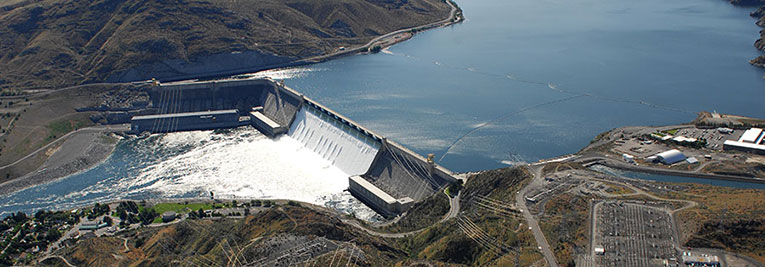
Grand Coulee Dam
Picture: Grand Coulee Dam in Washington used for hydroelectric power, irrigation, flood control, etc.

One of the issues almost everyone points out about these alternative energy methods is the steep cost. However, if one does a little research, they would find that in the grand scheme of things, it would be more beneficial to start using these alternative methods now and save on the damages of climate change in the future that will be much more costly - not just in the financial sense. In fact, a lot of  the methods we use now have gone down in cost according to IRENA (International Renewable Energy Agency). This gives us less and less excuses to keep using harmful energy sources, not to mention that industries concerning sustainability create more jobs as well.

I know that all this is 'easier said than done' to be cliche, but millions of people pitching in would make an outstanding difference. Instead of causing more harm to our planet, I think we should try to be the cause of undoing that harm however we can.

Source for IRENA: 

Thanks for reading! :)

Saturday, October 6, 2018

Bad Data from Bad Math

When presenting data and trying to put research into a picture people can understand, scientists use a wide variety of graphs and charts. This is all for the sake of interpreting their data… usually. There are those few times where one finds that graph that seems a little, well, off or even biased.

This bad data can skew the perceptions of the people who read it about the subject or issue in question simply because those who made the graph desired a certain effect from it. People can read about things all they want, but graphs and numbers can really put things into perspective. This makes it all the easier to manipulate data the slightest bit with a bad or biased presentation.

See the graph below:
Your Marathon Weekend Itinerary 
Description: This graph shown on Fox News about six years ago was supposed to be a representation of the 2012 Republican presidential nomination. More specifically, it aimed to show, in percentages, how much chance each candidate had of being nominated. The candidates were Mike Huckabee, Mitt Romney, and Sarah Palin. The graph showed that Huckabee had a 63% chance, Romney a 60% chance, and Palin a 70% chance.
Source: https://www.nbcchicago.com/news/local/FOX-News-Chart-Fails-Math-73711092.html

Now, I am sure that viewers noticed something right off the bat. The chart has a glaringly obvious issue. The fact that it is a pie chart means the percentages must add up to 100%. However, these three add up to 193%. This is the main problem that really caught my eye. How these numbers ended up being represented this way is beyond me, but something definitely went wrong in the math. Another thing: even just two of them added up together already breaches 100%. Why are they all so high? This makes it seem like all the Republican candidates have a high chance of being nominated and that they are almost equally popular, though the viewers of the graph would still get the impression that Palin was still most likely to win.

What is even more baffling is that this fairly inaccurate chart was shown on a well-known news channel for all to see. This certainly must have discredited their information and sources somewhat. The creators of the graph should perhaps see about checking their math next time. Whether these percentages were expressed this way purposefully or accidentally, always remember: don't be fooled by bad data.

Tuesday, August 28, 2018

Science and I

Science and I have not always been the best of friends. In middle school, I was probably one of those people who had no clue as to their likes or skills yet. I know that was most likely a lot of people, so we all know what that feels like: the discomfort of not belonging. However, when I reached high school and finally met my new biology teacher, she got me excited about science. I was suddenly interested in one of my school subjects, and not merely for the subject itself, but because my teacher inspired me to soon love it. Thus, from then on out, I always focused on science and had a love for each of my classes, no matter their differences: biology, chemistry, physics.

Soon, I found myself truly wishing for a career in science, and suddenly, my dream of becoming a veterinarian as a kid did not seem like something I chose simply based on the fact that I love animals. I realized that I must love both science and animals.

Science began to seep into my life in many ways. I found myself wondering and pondering more than I ever had because of things we were learning in class. I was curious now. I began to seek it out in videos that covered seemingly trivial. Yet, they interested me more than anything else, especially one YouTube channel called Sci Show.

The acronym, S.T.E.M. (science, technology, engineering, and math) to me means something more than just four separate disciplines. They are put together for a reason, the reason being that all of them intertwine and build off of each other. They are involved with one another, and they help each other rise to new heights. We use math in each of the pursuits, technology helps advance science, and so forth.


S.T.E.M. can work toward a common goal: sustainability. Helping each other advance, these four disciplines can be implemented in new ways to help the environment and us to be conscientious concerning the planet we live on.